
The "Honor System" of Class Action Settlements: Why You Don’t Need a Receipt to Claim Your Money
TL;DR: The Bottom Line
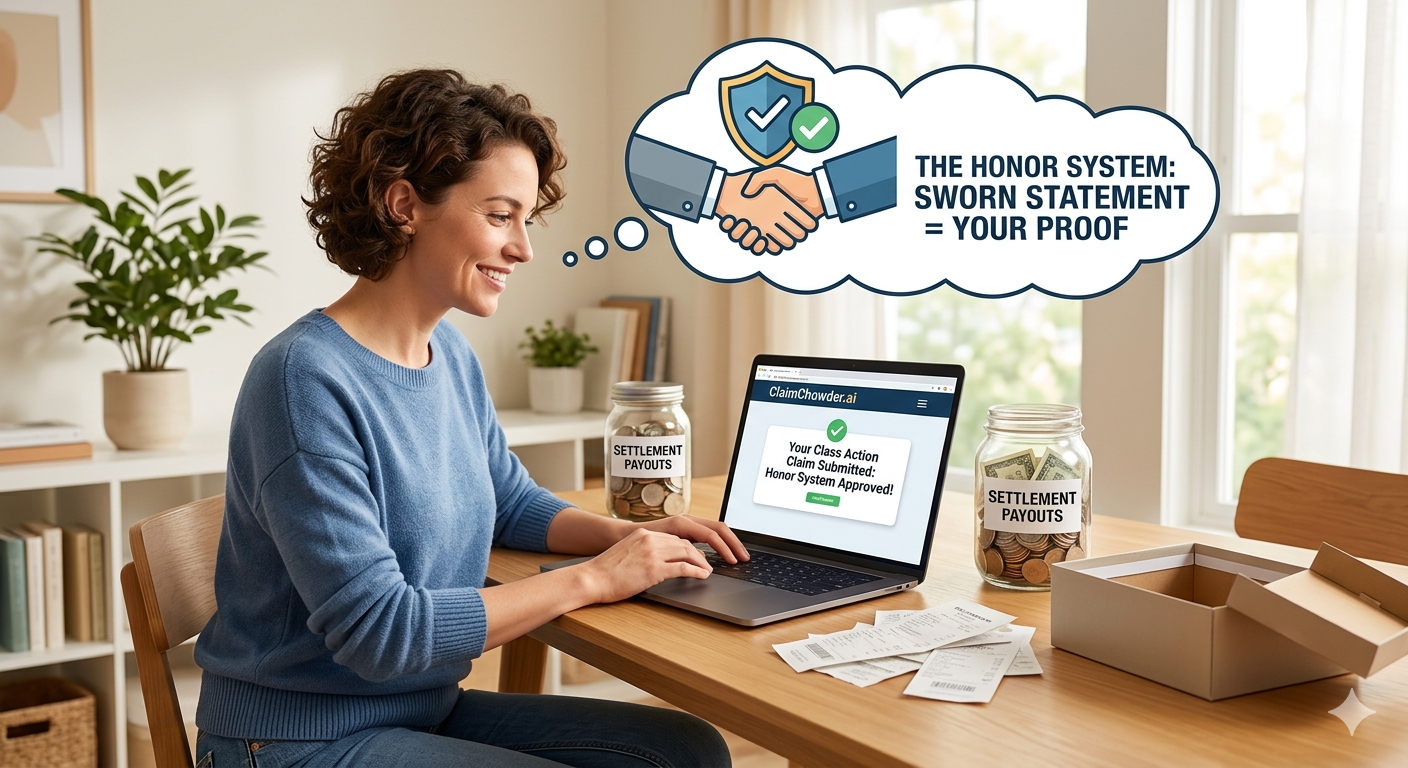
- You usually don't need proof: For many consumer class action payouts under $50, courts rely on a legal "honor system." If you bought the item, you can claim the money.
- It’s simple economics: For a massive corporation finalizing a settlement, it costs them more to hire administrators to verify millions of $5 receipts than it does to simply pay the claims.
- Honesty is the only policy: You will sign a digital form swearing under penalty of perjury that you purchased the product. If you bought it, that money is legally yours to take.
Let’s set the scene: You just saw a headline that a company is paying out millions of dollars because they falsely advertised a product you used to buy all the time. You think, "Great! I want my cut." But then reality sets in. You bought that product three years ago. You definitely don’t have the receipt. You probably paid in cash, or the transaction is buried deep in an old credit card statement. Instinctively, you might close the tab, assuming it’s a lost cause or some kind of data-harvesting scam. Don't close that tab. In the world of class action settlements, throwing away your receipt doesn't mean you threw away your right to a payout. Here is the insider truth about how many settlement claims actually work—and why the system is designed to pay you even without a paper trail.
Why Corporations and Courts Use the "Honor System"
When everyday people hear "legal settlement," they picture a courtroom drama where they have to submit a mountain of evidence to a judge. But class actions are completely different. When a large company decides to settle a class action lawsuit, they aren't usually doing it because they suddenly feel bad. They do it to clear the litigation off their balance sheet, avoid a messy public trial, and get back to business. They agree to set aside a massive pool of money—let's say $20 million—to make the problem go away. Once that fund is set up, the court's goal is to distribute it to the affected consumers as efficiently as possible. Imagine if the court required a physical receipt for every single $10 claim on a bottle of sunscreen or a $15 smart home device plugin. The court-appointed Settlement Administrator would have to hire hundreds of people to squint at millions of faded, crumpled pieces of paper. The administrative costs would eat up the entire $20 million fund before anyone got paid! Instead, the legal system relies on a much smarter, frictionless mechanism: The Honor System.
How Claiming Without a Receipt Actually Works
For most consumer class actions, the claim form is entirely digital and takes about two minutes to fill out. Here is what happens:
- You Provide Your Basic Info: Name, address, and how you want to be paid (Venmo, PayPal, Zelle, or a physical check).
- You State Your Purchase: You check a box or select from a drop-down menu indicating how many times you bought the disputed product or used the service during the specific timeframe.
- The Penalty of Perjury Clause: This is the most important part. At the bottom of the form, you must digitally sign a statement swearing under penalty of perjury that the information you provided is true.
That digital signature is your "receipt." By legally attesting that you are a member of the class, the court accepts your word.
Is There a Catch? (And How to Avoid Scams)
The honor system is fantastic for consumers, but it naturally triggers people's scam radar. Why is this company just handing me money based on my word? Here is the reality check: * Caps on payouts: Without a receipt, courts usually cap your payout. For example, a settlement might say, "Consumers without proof of purchase can claim up to 5 items for a maximum of $25. Consumers with proof of purchase have no cap."
- Fraud checks: Settlement administrators use sophisticated software to weed out bots and bad actors trying to submit thousands of fake claims.
- It is a federal crime to lie: You should absolutely never claim a settlement for a product you didn't buy. It is perjury, and administrators do flag and reject fraudulent claims.
But if you did buy the product, use the cloud storage service, or subscribe to the app? That money was set aside specifically for you. Leaving it on the table just means the corporation gets to keep it, or it gets donated elsewhere.
Your Next Step: Stop Leaving Money on the Table
Now that you know you don't need a shoebox full of receipts to get paid, it’s time to start looking for the settlements you qualify for. At ClaimChowder.ai, we cut through the legal jargon and track the latest, most lucrative settlements so you don't have to. We’ll tell you exactly what the lawsuit is about, how much you can claim, and whether you need proof of purchase. Ready to see what you're owed? Create your free ClaimChowder account today, set up your customized alerts, and turn those old purchases into continuous cash.
Disclaimer: The content on ClaimChowder.ai is provided for educational and informational purposes only and does not constitute legal advice. Reading this blog or using our platform does not create an attorney-client relationship. If you need specific legal guidance, please consult a qualified attorney.